Why Pakistan Is Not Chasing Hypersonic Systems – For Now!
Why Pakistan's Fatah-4 favours terrain-hugging precision over hypersonic speed, and where hypersonic systems truly fit in Pakistan's strategic and naval doctrine.

Why Pakistan's Fatah-4 favours terrain-hugging precision over hypersonic speed, and where hypersonic systems truly fit in Pakistan's strategic and naval doctrine.

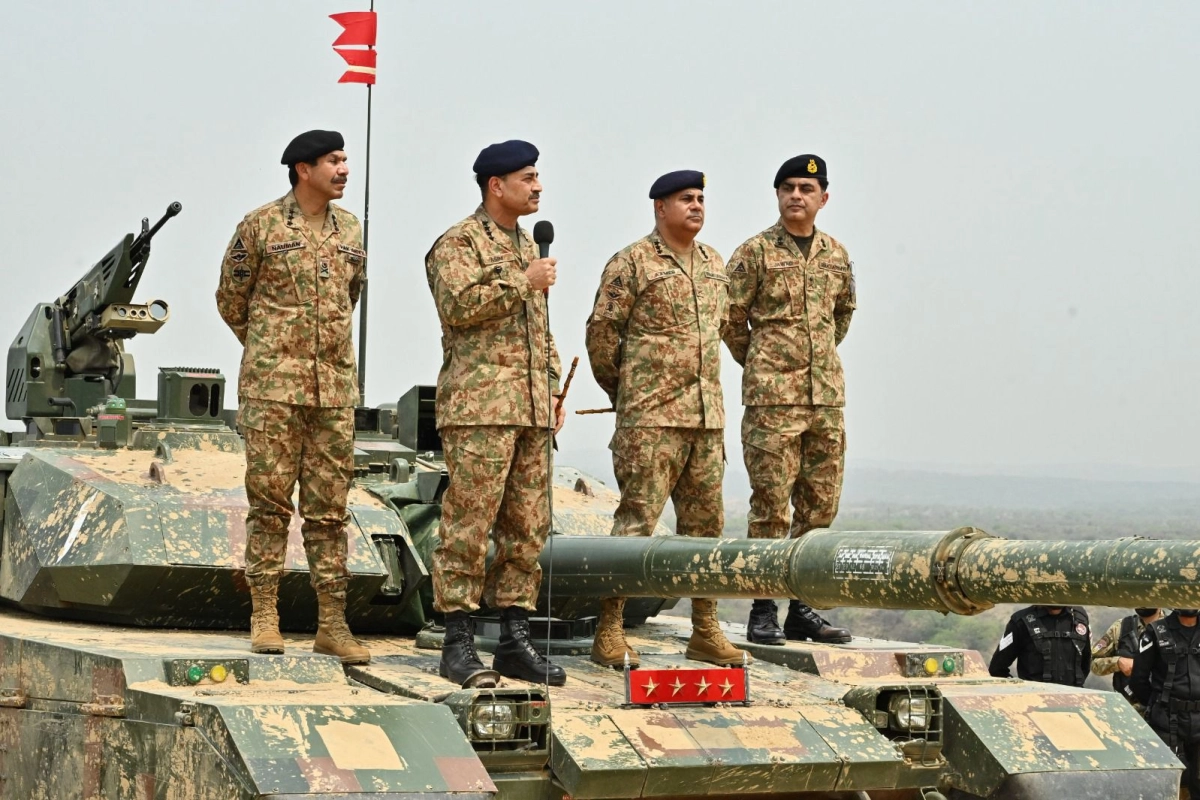
Lt. Gen. Nauman Zakaria's address at the IISS Shangri-La Dialogue 2026 is best understood not as a statement but as a doctrine brief. Hammer Strike is the mature culmination of a decade of Pakistani conventional thinking, built squarely on the structural opening that Galwan created.

Khawaja Asif’s bluntness, Saudi signalling, and Pakistan’s embracing of rocket-force doctrine point to a new deterrence template — not nuclear grandstanding but scalable sub-strategic packages!

As thresholds dissolve and deterrence becomes theatre-specific, nuclear restraint risks becoming obsolete

A response to the June 2025 Foreign Affairs claim that Pakistan is building an ICBM to reach the continental United States: the open-source infrastructure points more plausibly to hypersonic counterforce systems that collide with U.S. forward-deployed naval assets.

A sweeping doctrinal audit of the post-October 7th world – from the exhaustion of Israeli strategic templates to Iran's overextension, Hamas's ideological permanence, and Pakistan's emerging military-industrial posture.

Following confirmed Indian strikes, Pakistan's retaliation phase begins. This post outlines its mature doctrinal response, covering symmetric targeting, new weapons like the Ra'ad II and AI-powered Kemankeş 2, and the critical role of escalation management.

Written a week before the 2025 India–Pakistan aerial confrontation, this analysis predicted with striking accuracy the implications, Pakistan's response, and the tools of delivery.