
May 10, 2025
Note
This article was written on the night of 10 May 2025 on X, in the wake of persistent Indian drone swarms across the breadth of international border on the day of 10th May.
I think, it is becoming increasingly clear that continued drone swarms link up with a post-strike plan of keeping Pakistan under pressure and at bay through a blend of Phase Zero–Phase One manoeuvres, persistent ISR shaping, and a broad-spectrum media-psyops campaign. It’s almost doctrinal: India is not merely managing retaliation, it is shaping the battlespace, testing Pakistan’s air defence layers, and imposing a multi-domain operational rhythm designed to stretch both kinetic systems and command cognition. The decision calculus shifted decisively when Pakistan’s resolved to respond to the Indian air strikes, regardless of cost, became clear thereby creating a strategic inevitability that India is now trying to pre-emptively manage and suppress.
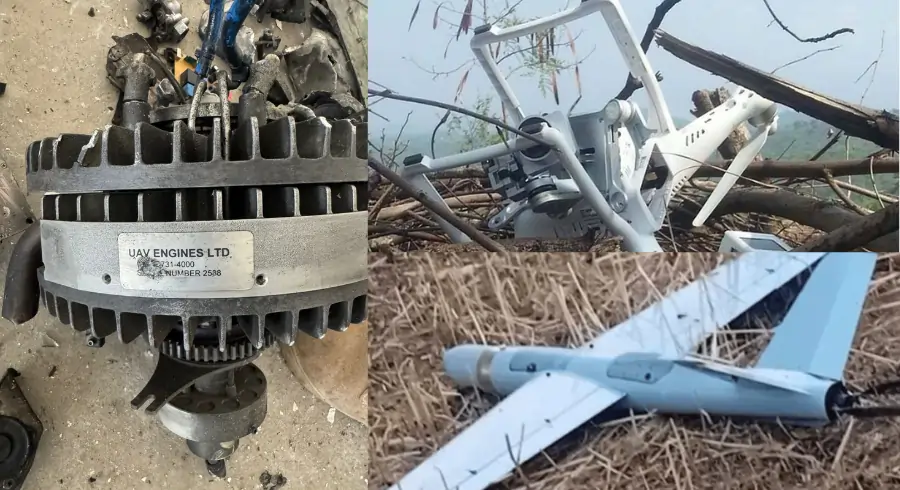
India’s multi-sector drone offensive – comprising Harops, Harpys, and Warmates launched in persistent swarms from north to south – serves multiple interlocked purposes with clear Israeli doctrinal footprint. At the core is real-time mapping of Pakistan’s electronic order of battle (EOB). By compelling the activation of radar bands, air defence missiles, and engagement protocols across various altitude and range tiers, India builds a live architecture of Pakistani defensive deployments, reaction thresholds, and sectoral vulnerabilities. Especially from HIMAD (e.g. HQ-9, LY-80, AM-350s) and LoMAD systems. Each drone-package incursion becomes an intelligence probe, drawing out signal emissions, command reaction times, and engagement preferences. The telemetry from these engagements feeds directly into India’s SEAD/DEAD libraries, allowing future kinetic packages to bypass, jam, spoof, or overwhelm the very systems now responding. So, the timings, response tiers, radar coverage gaps, C2 decentralisation, and point-defence allocations are all under scrutiny.
Simultaneously, the drone swarms generate a form of low-cost, high-return attrition. Every drone downed by a radar-guided missile or burst of programmed AAA depletes Pakistan’s limited stocks of interceptors and 35mm ammunition. This forces resource burn-down, without putting Indian personnel or capital assets at risk. More critically, it imposes psychological fatigue on Pakistan’s air defence crews, narrowing the margin for escalation management. Units operating at sustained tempo over several days are prone to error, misidentification, or hesitation. The longer this campaign persists, the more it desensitises Pakistan to the tactical footprint of drones – conditioning it not to escalate, and thereby creating a grey zone that India can exploit for more aggressive ISR or kinetic insertion under the pretext of swarm operations.
The psyops dimension runs in parallel. The optics of Indian drones operating persistently across sectors create the perception of initiative, technological superiority, and escalation dominance. Indian media arms amplifies this narrative, projecting an image of control and calculated pressure, while implicitly signalling to external actors that India retains the ability to manage and dominate the subcontinental escalation ladder. In contrast, Pakistan’s position is deliberately forced into the reactive –intercepting, reporting, and repeating – a narrative cycle that displaces strategic initiative and erodes deterrence posture unless interrupted by a retaliatory act.
What India is executing doctrinally sits at the seam between Phase Zero and Phase One operations. It is not full-scale war, but it is a deliberate preparation of the electromagnetic and kinetic theatre. Drone swarms serve to soften, blind, and catalogue air defences, and to keep pressure constant while decisions are taken in New Delhi regarding thresholds and consequences. The distributed nature of these swarms across multiple sectors is not random, it seems to be a rehearsal for a broader penetration campaign, one that could support surgical strikes, manned aircraft packages, or standoff munitions in the event Pakistan follows through on its declared intent to retaliate for Indian strikes. In this calculus, India seeks to not only pre-empt Pakistan’s response but to weaken the terrain over which it may occur.
For Pakistan, the challenge is no longer tactical; it is strategic. Intercepting drones is necessary, but not sufficient. The campaign must be interpreted and countered at its doctrinal level. Pakistan must preserve high-tier air defence assets, reduce signature emissions, and avoid presenting a fixed electronic footprint. A blend of deception – false emitters, radar decoys, and mobile battery cycling – must confuse Indian ISR. EMCON (emission control) disciplines, optical tracking, and sensor fusion must be intensified to sustain effective drone defence without revealing key SAM locations. And most critically, the retaliatory act promised by Pakistan must be executed in a manner that sidesteps Indian shaping efforts, reclaims the initiative, and fractures the current rhythm of dominance.
India’s drone swarm is not the war. It is the overture to a possible limited war scenario. The aim is to deny Pakistan the confidence or operational coherence to retaliate in meaningful form. But Pakistan’s calculus is already resolved: retaliation will occur. The strategic window, then, is narrow. Either India succeeds in suppressing Pakistan’s options before the blow falls, or the theatre enters a new phase where both sides abandon containment and step onto the escalation ladder in full. The outcome will be shaped not by drones or intercepts, but by timing, initiative, and which side dictates the tempo when that next move is made.
Just as the above assessment was written, Indian jets have attempted direct strikes on Nur Khan, Murid, and Shorkot Airbases, core nodes of the PAF’s operational and strategic air grid for strike, airlift and frontline UAVs. All projectiles were intercepted and no PAF assets were harmed, but the escalation vector has now shifted dramatically. What had been a sustained Phase Zero-Phase One shaping operation through drone swarms has now escalated into a deliberate attempt at degrading Pakistan’s air force readiness and deterrent infrastructure. This move signals a doctrinal transition by India from shaping to active contestation of air dominance – effectively blurring the line between sub-threshold coercion and open hostilities. It validates Pakistan’s earlier calculus to respond with force and now reaffirms the urgency of timing that response before Indian operations further mature into a SEAD/DEAD prelude. The airbase strikes, while tactically unsuccessful, are strategically revelatory – they confirm intent, operational appetite, and a desire to force Pakistan into either absorbing successive blows or stepping into a high-stakes retaliatory space on compressed timelines.
قاتِلُوهُمْ يُعَذِّبْهُمُ اللَّهُ بِأَيْدِيكُمْ وَيُخْزِهِمْ وَيَنصُرْكُمْ عَلَيْهِمْ وَيَشْفِ صُدُورَ قَوْمٍ مُّؤْمِنِينَ
“Fight them; Allah will punish them by your hands, disgrace them, give you victory, and heal the hearts of the believing people.”
و یبقی وجہ ربک ذوالجلال والاکرام